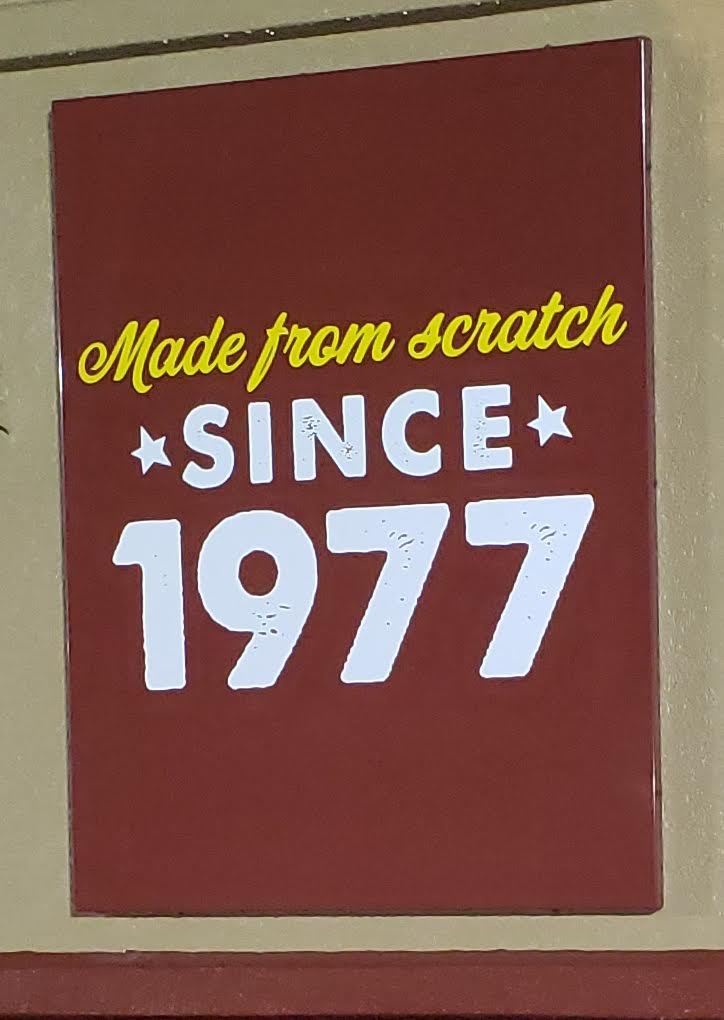
We hope everyone has had a great weekend! Our local Bojangles’ has a new sign on the outside, and Rob’s first thought was the above quote. It’s the little things that bring laughter!
Tomorrow is a pre-op appointment for his stem cell transplant, oncologist appointment, labs, and dressing change. He continues to do well with his port.
It’s hard to believe that a week from tomorrow, he will be admitted to Atrium and begin high dose chemotherapy prior to the stem cell transplant. I’ll post more information and timelines after tomorrow.
In the meantime, thank you all so much for helping us get this far! You’ve helped keep the faith, and we appreciate everyone more than any words or blog can even begin to express!!!
The stem cell harvest is complete! We just got home and are so thankful it was a success. We couldn’t have asked for a better team at the Apheresis Unit! They are amazing!
Rob is experiencing some tough side effects, but not nearly as bad as yesterday.
I’ll post more information about what is happening over the next few weeks soon. Thank you again for everything!!!
Rob woke up feeling much better this morning, and slept well. This morning, things are going well with the stem cell harvest!
It is looking like we won’t have to be back for a third day tomorrow!!
Here is what we have learned thus far this morning:
1. According to the doctor, Rob’s lupus, and the previous treatments for it, may be making it more difficult for his body to produce stem cells.
2. Both the stem cell doctor and his hematologist were pleased with the numbers from last night! Even though he didn’t reach the goal set yesterday, both said he had enough for two transplants! Hopefully this means this is the last day of stem cell harvesting.
3. The tingling is still bad, but seems to be more under control. There is no longer the feeling of a weighted mask on his face and his speech is no longer slurred.
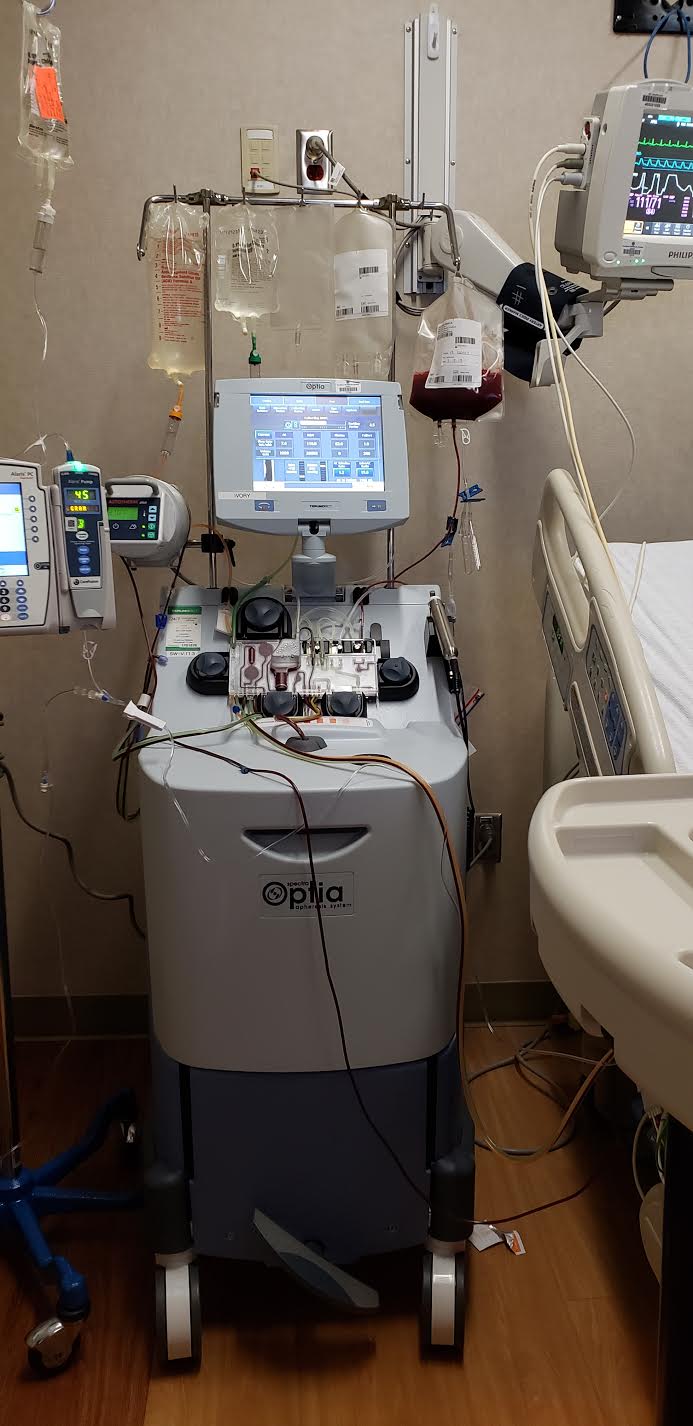
This is the Apheresis machine that is harvesting the healthy stem cells to freeze for the transplant:
These healthy stem cells will replace ones that are killed during the high dose chemo, and help rebuild his immune system. He will receive these stem cells a few days after receiving the high dose chemotherapy. Rebuilding his immune system will take time, 60-100 days, with no complications. We will have more details on this as we get closer and learn more.
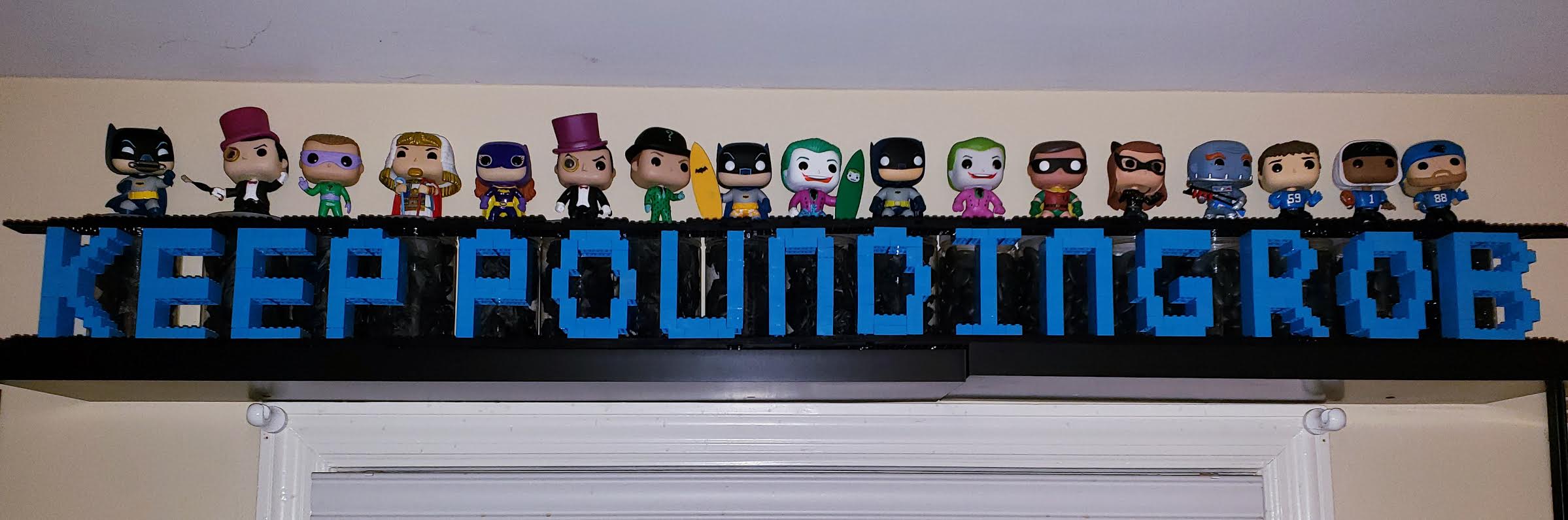
Thank you again for your blog comments, calls and texts!! They have truly helped him Keep Pounding today!!
Rob is physically and emotionally exhausted from day one of the stem cell harvest. We were at Atrium from 5:30 am-6:30 pm.
He experienced some side effects like tingling and numbing over the face and hands. which became extremely uncomfortable. They briefly stopped the stem cell harvest in order to give some medicine through his IV, which thankfully helped.
Stem cell harvests can take anywhere from 1-3 days.
The collection goal today was 12 million stem cells. They collected 5 million.
Therefore, we will have another long day at Atrium tomorrow, and possibly a third on Thursday.
I will add more details on today and further updates tomorrow from Atrium.
Prayer Requests:
Keep Pounding Team, we could really use your prayers please!
Please pray for Rob as he keeps pounding a second day tomorrow, and possibly a third day for the stem cell harvest.
Please pray for his patience, strength and faith to stay strong, even as his body is extremely weak tonight from the stem cell harvest.
Please pray for the brave and encouraging friends we are meeting on the same journey.
Thank you so much for your prayers, support and love!!
Rob is on day 2 of 5 of G-CSF shots (3 per day) for his stem cell harvest next week. We had an early morning at Levine today, and another one tomorrow, followed by a busy next week.
So what exactly are these shots, and why does he have to have them?
For a much better explanation, please see the following text copied from the Leukemia and Bone Marrow Transplant Program of British Columbia website, followed by the apple tree analogy, which was explained by the Levine pharmacist.
“What is G-CSF?
“G-CSF is a colony stimulating factor. Colony stimulating factors are naturally occurring special proteins in the human body that stimulate blood cell production and growth. G-CSF helps increase the number of stem cells in your blood stream.
These naturally occurring proteins can also be manufactured as a drug. The G-CSF used in our Program is Neupogen®. The generic name is filgrastim.
Why is G-CSF given?
In order to limit the number of times you have to undergo stem cell collection, the transplant doctor will try to move your stem cells out of your bone marrow and into your blood stream. This process is called mobilization. The G-CSF you will receive will encourage the growth of stem cells in your body and mobilize them into your blood stream for collection.”
Source: Leukemia and Bone Marrow Transplant Program of British Columbia website:
Another way to understand this process is to think of an apple tree.
The G-CSF shots grow the apples (i.e. stem cells), and then the mobilizer on Monday shakes the tree to get the apples ready to harvest. In this case, the mobilizer moves the stem cells into the blood stream from the bone marrow. This makes the collection process much easier.
Prayer Requests:
Please pray that Rob continues to do well with his port, and there continues to be no major complications.
Please also pray that these shots (aka apple growers) are helping increase his stem cell production for the stem cell harvest on Tuesday. The collected stem cells will be sent to a lab to be processed and frozen until transplant day.
You all have been so kind to add us to your prayer lists, and we appreciate it beyond words. Please let us know if there is anyone we may add to ours.
Thank you for being there, Keep Pounding Rob team!!
From 8:00-12:15, we were at Mercy hospital for Rob to get his trifusion catheter. Much of this was pre-op and post-op, as the actual procedure is from 30-45 minutes.
He didn’t have any complications, and was asleep for the entire process, thankfully. He did say it is odd to now have 3 tubes coming out of his chest.
After he was released, we headed to Levine, where we joined others on this same journey for a stem cell workshop from 1:00-4:00.
The workshop consisted of a lengthy but informative presentation, with talks given by the transplant coordinators, transplant nurse, social worker, nutritionist, infectious disease specialist, and a former stem cell transplant patient.
We are grateful the port is in, and for all of the knowledge learned today at the workshop!
What’s Next:
Tomorrow, Feb. 8th, we have an early day at Atrium, where Rob will get his first of five shots for stem cell preparation, and learn more about caring for and living with his port for the next 4-8 weeks. They touched on it a little in the workshop, but we will have much more information tomorrow.
This weekend, I’ll post more details about what we learned today, and what we will learn tomorrow.
Thank you for pounding along with his on this journey!! Ya’ll are the BEST!!
For Rob’s latest medical update, please see previous post.
There are two types of stem cell transplants, Autologous and Allogeneic. Rob will be having an Autologous transplant.
The following description of the Autologous transplant is quoted directly from the American Cancer Society’s website, for a better understanding.
“For an autologous stem cell transplant, the patient’s own stem cells are removed from his or her bone marrow or peripheral blood before the transplant. The cells are stored until they are needed for the transplant. Then, the person with myeloma gets treatment such as high-dose chemotherapy, sometimes with radiation, to kill the cancer cells. When this is complete, the stored stem cells are given back to the patient into their blood through a vein.
This type of transplant is a standard treatment for patients with multiple myeloma. Although an autologous transplant can make the myeloma go away for a time (even years), it doesn’t cure the cancer, and often the myeloma returns.
Some doctors recommend that patients with multiple myeloma have 2 autologous transplants, 6 to 12 months apart. This approach is called tandem transplant. Studies show that this may help some patients more than a single transplant. The drawback is that it causes more side effects and as a result can be riskier.”
Today Rob met with Palliative Care, a team of doctors, nurses and professionals who help treat side effects of cancer and cancer medications.
We are optimistic that he will finally get some relief from the neuropathy pain that has been making it difficult to walk. It is believed the neuropathy is a side effect of the chemotherapy.
We are extremely grateful for their knowledge and encouragement, and integrated team effort with Rob’s oncology team.
What’s Next:
Tomorrow morning, Rob will have an outpatient procedure at the hospital to get his trifusion catheter (also called port). The port is how they will harvest the stem cells next week for the transplant, draw blood, and administer IV meds in the coming weeks.
At the last lab visit, the nurse told Rob, “Son, your veins are about done!” She, along with his doctor, agrees that the port will make things much easier going forward.
Please keep Rob in your thoughts and prayers for a long day ahead tomorrow, Feb. 7th! I will post an update once we are back home, probably tomorrow afternoon.
Thank you again for your love and support!! It is keeping us going, and we appreciate it beyond words!